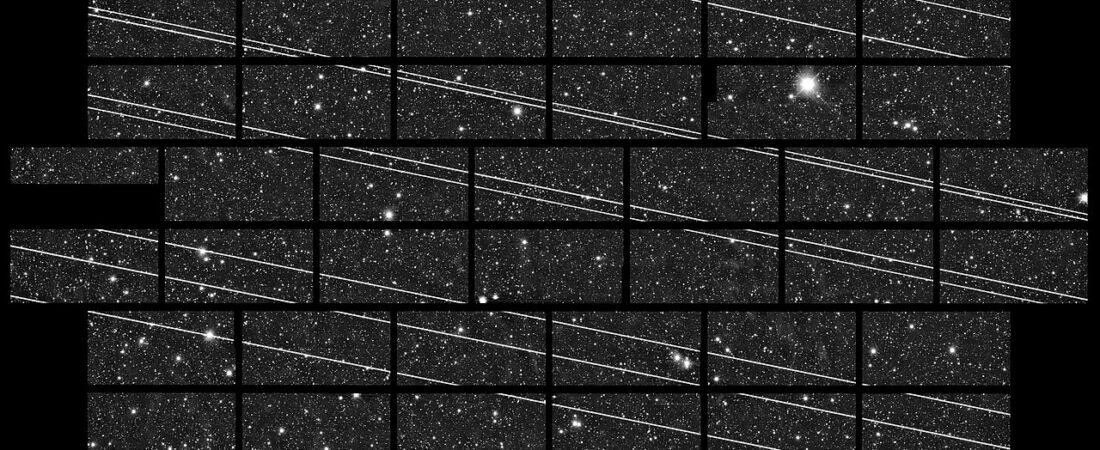
Earth’s night sky is changing as the number of satellites in orbit rises rapidly. Large constellations can leave bright trails across long-exposure astronomical images, complicating observations for both professional observatories and amateur astronomers.
The effect is especially noticeable around dusk and dawn. The ground may already be dark while satellites at higher altitude are still illuminated by the Sun and can reflect that light toward telescopes.
The European Southern Observatory has warned that current and proposed satellite fleets could place growing pressure on optical astronomy. Astronomers are developing mitigation strategies, including predicting satellite passes, changing observing schedules and improving image-processing techniques. Satellite operators are also testing designs intended to reduce reflected light.
These measures can help, but they may become less effective if the number of satellites grows very rapidly. The broader issue is therefore becoming a policy and engineering question as well as an astronomical one: how can access to orbit expand while preserving humanity’s ability to observe a dark sky?
Source: European Southern Observatory (ESO), assessments of satellite constellations and their effects on ground-based optical astronomy.